The growing interest in electric cars in South Africa shows that more people are at least curious about the technology.
But South Africa hasn’t seen the same momentum as other developed nations, mostly because several barriers make EV adoption difficult for everyday drivers.
The biggest issue is cost. With no local EV manufacturing, high import taxes, and the general premium EVs carry, the price tags are still out of reach for most people.
For example, the electric Mini Countryman SE starts at over R1 million, while the petrol version starts just above R700,000.
There’s also the problem of infrastructure. South Africa still has very few charging stations, and many people aren’t convinced the power grid can handle a wave of new EVs when it already struggles with loadshedding.
So it’s fair to ask the question: what would mass adoption of EVs mean for the grid?
Table of content
The faces of EV adoption in South Africa right now
EVs currently make up a small but growing share of new car sales. Brands like BMW, Mercedes-Benz, and Volvo have all launched electric models in the country.
Some of the better-known EVs include the Nissan Leaf, BMW i3, and Jaguar I-Pace. More recently, the BYD Dolphin and BYD Dolphin Surf joined the market as the most affordable EV options available right now.
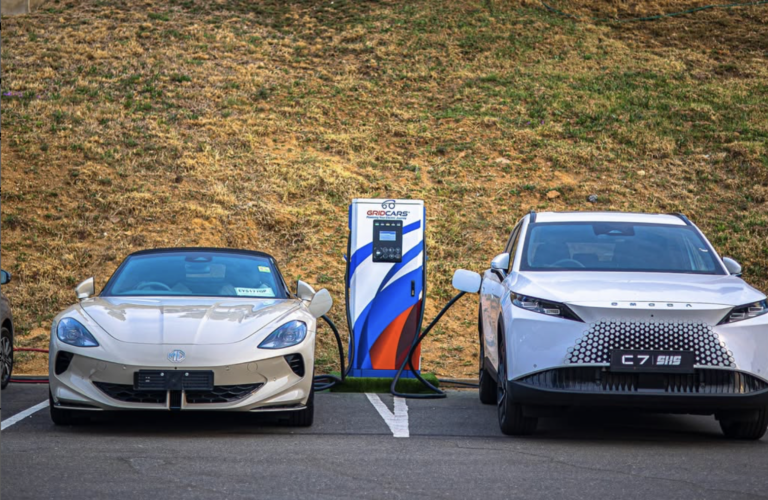
Charging providers like GridCars and Zero Carbon Charge are also expanding their networks, slowly making it easier for early adopters to drive and charge with confidence.
These companies all work together, although independently to contribute to the growth of EV.
How carsharing is increasing adoption
The upfront cost of buying an electric car is still a major barrier. Even though EVs are cheaper to run, most people can’t get past the initial price tag.
And when fewer people buy EVs, it slows down future investment in electrification.
Carsharing helps bridge that gap. It gives commuters and potential buyers an easy way to try electric mobility without committing to ownership.
Peer-to-peer carsharing platforms help car owners offset their costs by renting out their vehicles to people who only need a car temporarily.
For EVs, this creates new opportunities. Platforms like Tarlen can serve commuters, tourists, or anyone curious about electric cars who just wants to try one for short city trips.
Instead of expecting one person to carry the full cost and manage the charging routine, a shared EV spreads those costs across many short trips. This raises utilisation and lowers the cost per trip.
Most importantly, it exposes more people to the experience of driving an EV. And that matters because behaviour change is just as important as the financial side.
Range Anxiety
Range anxiety is still one of the biggest psychological barriers to EV adoption. Many people worry they’ll run out of charge before they reach their destination.
Using a shared EV for a planned trip, whether it’s a weekend away or a daily commute, gives drivers a low-pressure way to test real-world range.
It’s a simple way to answer the question, “Can my life actually fit into an EV’s range?” without a long-term financial commitment.
The EV test drive over days or weeks:
A quick 15-minute dealer test drive isn’t enough to understand how an EV actually fits into your life. You don’t get a sense of charging routines, regenerative braking, or how energy use changes with different driving conditions.
Renting an EV for a few days, or even a few weeks through Tarlen gives you hands-on experience.
You learn how to plug in at home (if that’s possible), find public chargers using apps, and see how an EV works in your day-to-day routine.
It becomes a practical test, not just a showroom moment.
Making EV available without massive financial investment
Carsharing makes this technology accessible to far more people. For the cost of a weekend rental, anyone can experience the instant torque and quiet drive of an EV.
It also helps people who aren’t ready to switch yet. They can compare the EV experience to their petrol cars, understand the real savings, and build a clearer financial case for when they eventually buy one.
Data & Demand
As more people rent EVs in certain areas, like Pretoria East or the Southern Suburbs in Cape Town, platforms like Tarlen start to pick up clear demand patterns.
That data is valuable. It shows charging network providers where real usage is happening.
When they respond by building more chargers in those areas, it creates a positive feedback cycle: more chargers make EVs easier to rent and own, which increases demand even further.
Reducing emission and congestion
Carsharing has been shown to reduce the overall number of privately owned vehicles on the road. In some cases, one shared EV can replace up to 15 private cars.
Fewer cars mean less congestion and fewer emissions, which supports South Africa’s climate goals and helps cities breathe a little easier.
How Tarlen makes EV more accessible
Here’s a step-by-step guide if you’re ready to try an EV:
Register: Sign up on the Tarlen app or website and complete your driver’s licence verification.
Choose your EV and complete reservation: Browse unique make and models available. When you find one that fits your dates, complete payment to confirm your booking.
Pickup your EV: Use the in-app messaging feature to arrange pickup details or share your delivery location if you selected delivery.
Step-by-step guide to list your EV on Tarlen
Confirm eligibility
Visit the eligibility page to check whether your vehicle can be listed on Tarlen. The page outlines which types of cars are accepted and which are not.
If you are unsure, you can contact the support team by email or WhatsApp. They will help you confirm your vehicle’s status.
Sign up as a Tarlen Host
Download the Tarlen app and create a host account. You only need your full name, email address, and phone number to get started.
Create your listing
Once you’re signed up, select “List my car” and follow the steps.
Vehicle information: Enter the location, make, model, year, and other required details.
Photos: Upload 8–12 clear, well-lit photos. Humans are visual creatures, and the photos create your first impression. Make sure the images are bright, clear, and thoughtfully taken. Follow this guide to learn how to take great photos of your car.
Vehicle specifications and features: Add the body type, colour, transmission, fuel type, roof type, and the number of seats and doors. Highlight any features that make your car stand out. Include a short description that tells guests why they will enjoy driving it.
Extras (optional): You can offer items like a phone mount, child seat, GPS device, bicycle rack, or surfboard rack. You may include them for free or charge a small additional fee.
Pricing and availability: Set your daily rate, mileage allowance, discounts, and availability schedule. You can also choose whether to offer delivery and, if so, set a delivery fee.
Charles leads Tarlen, a carsharing marketplace built to take the hassle out of renting cars. By connecting travelers with car owners and small rental agencies, Tarlen makes travel fun again.